Hudson Valley Retreat
-
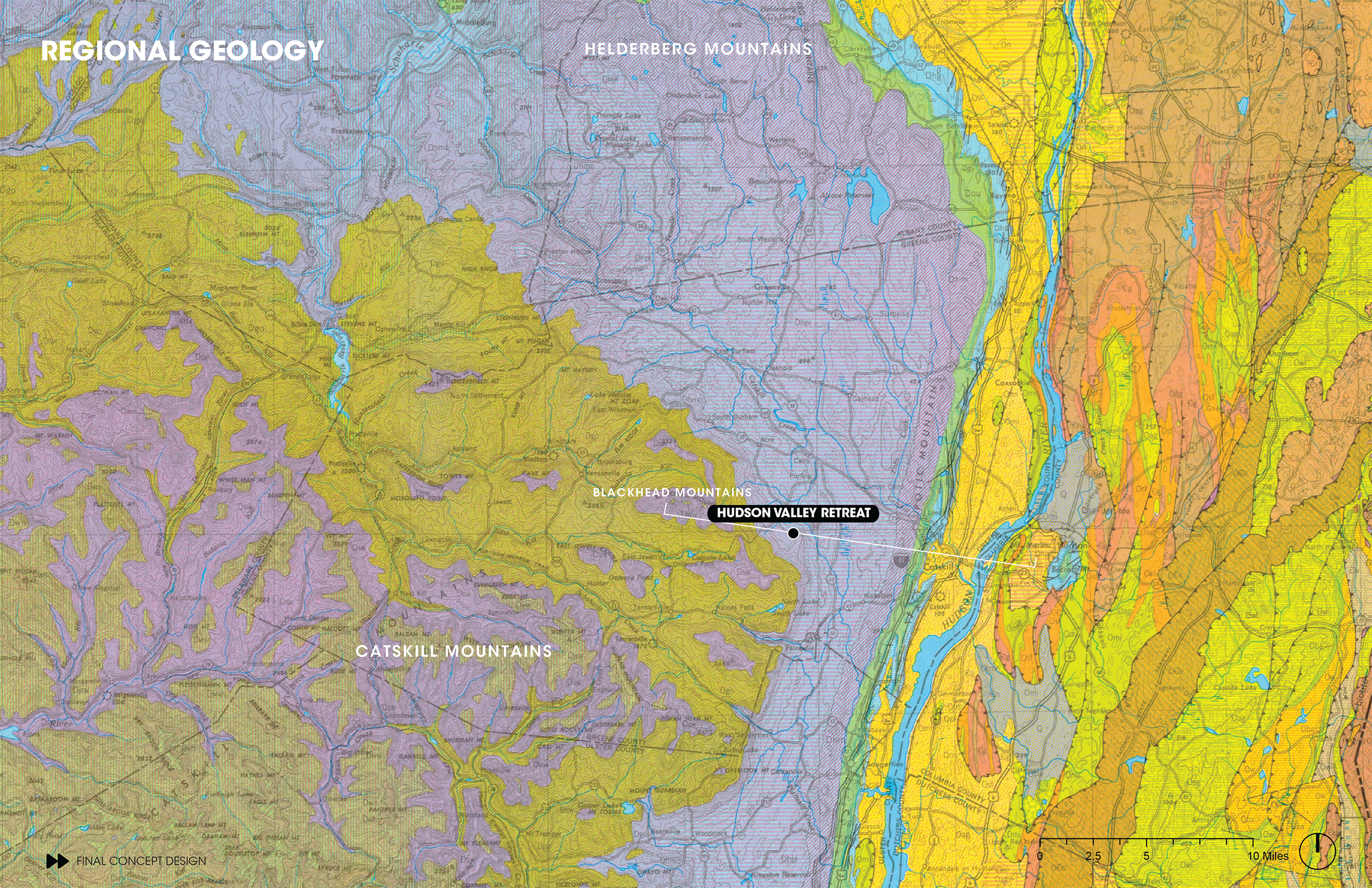
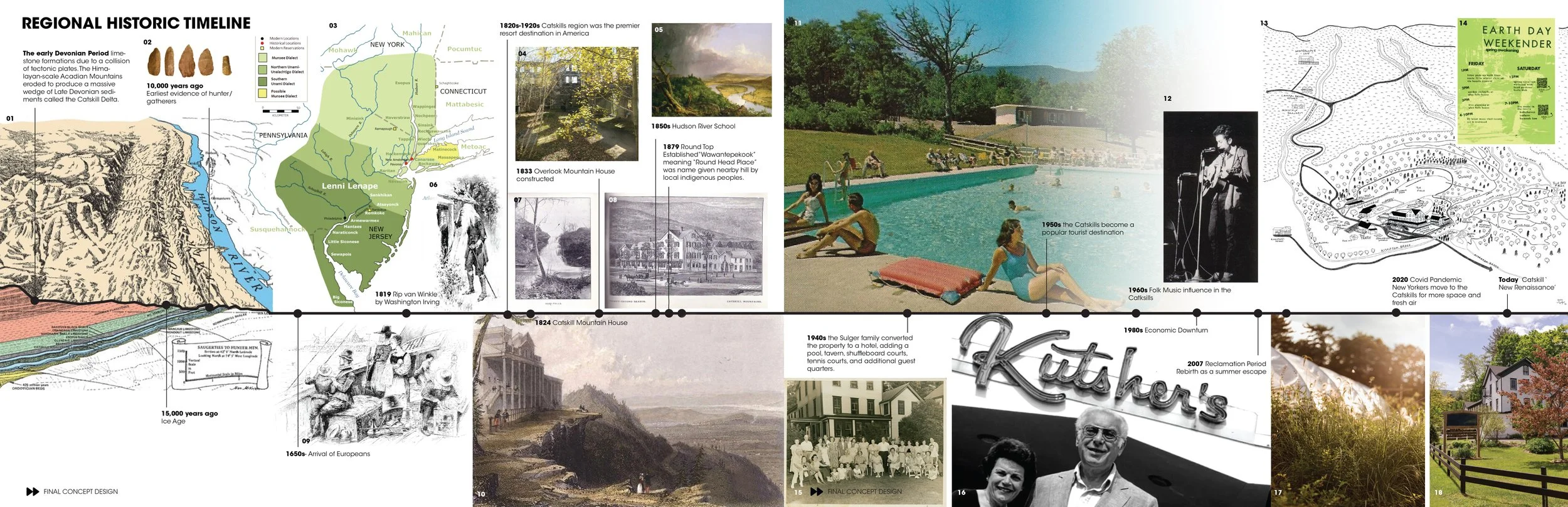
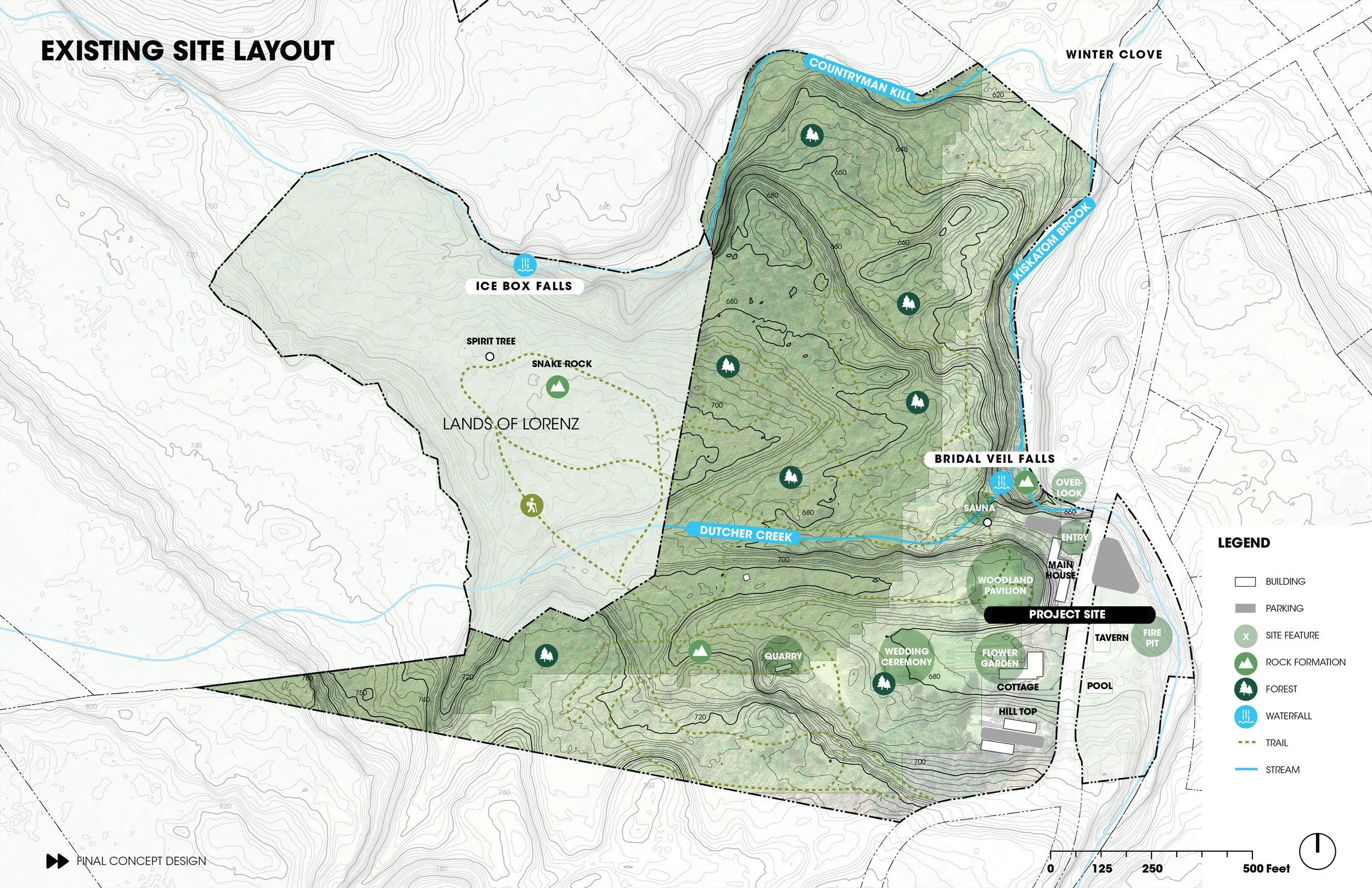
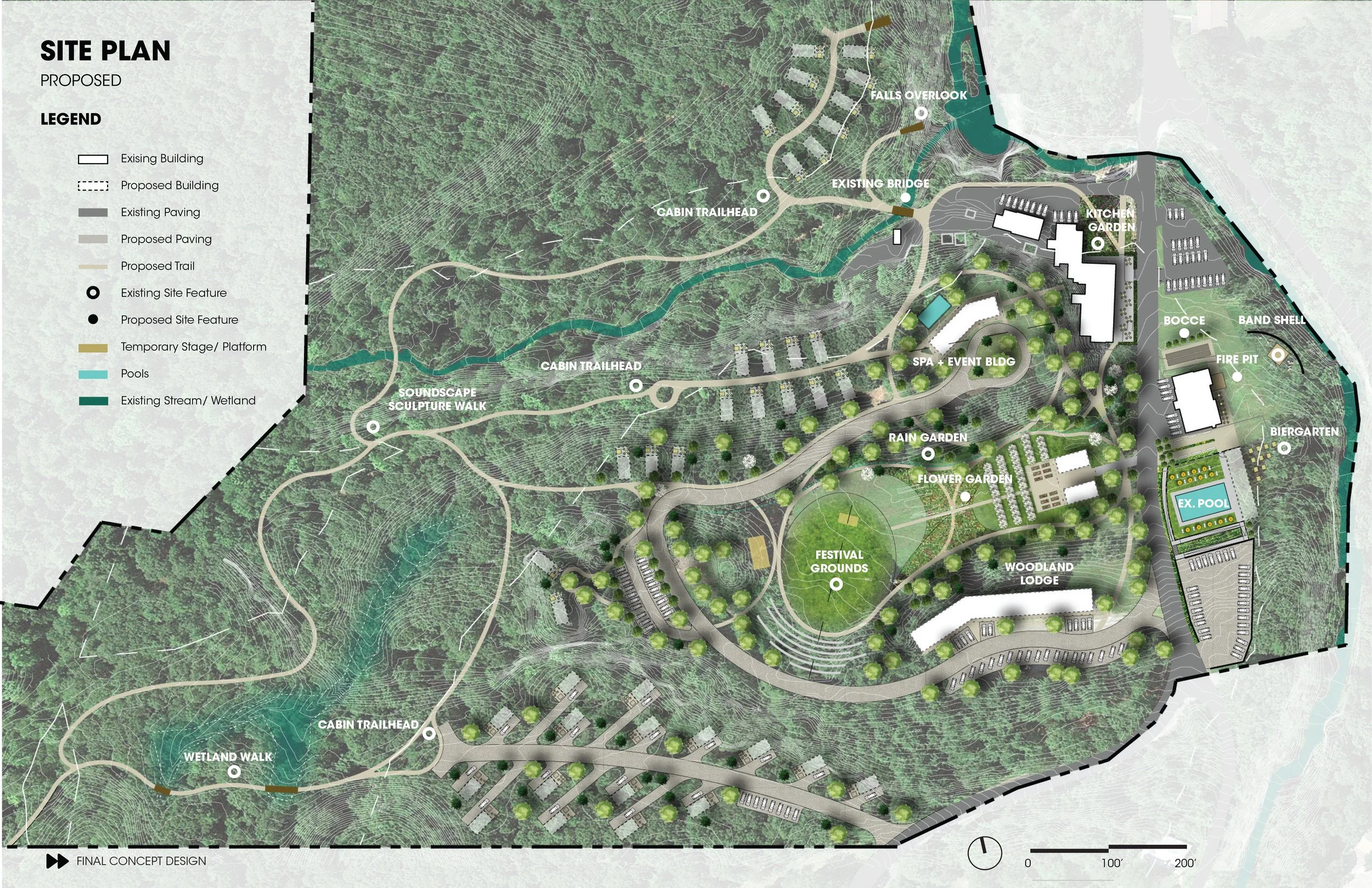
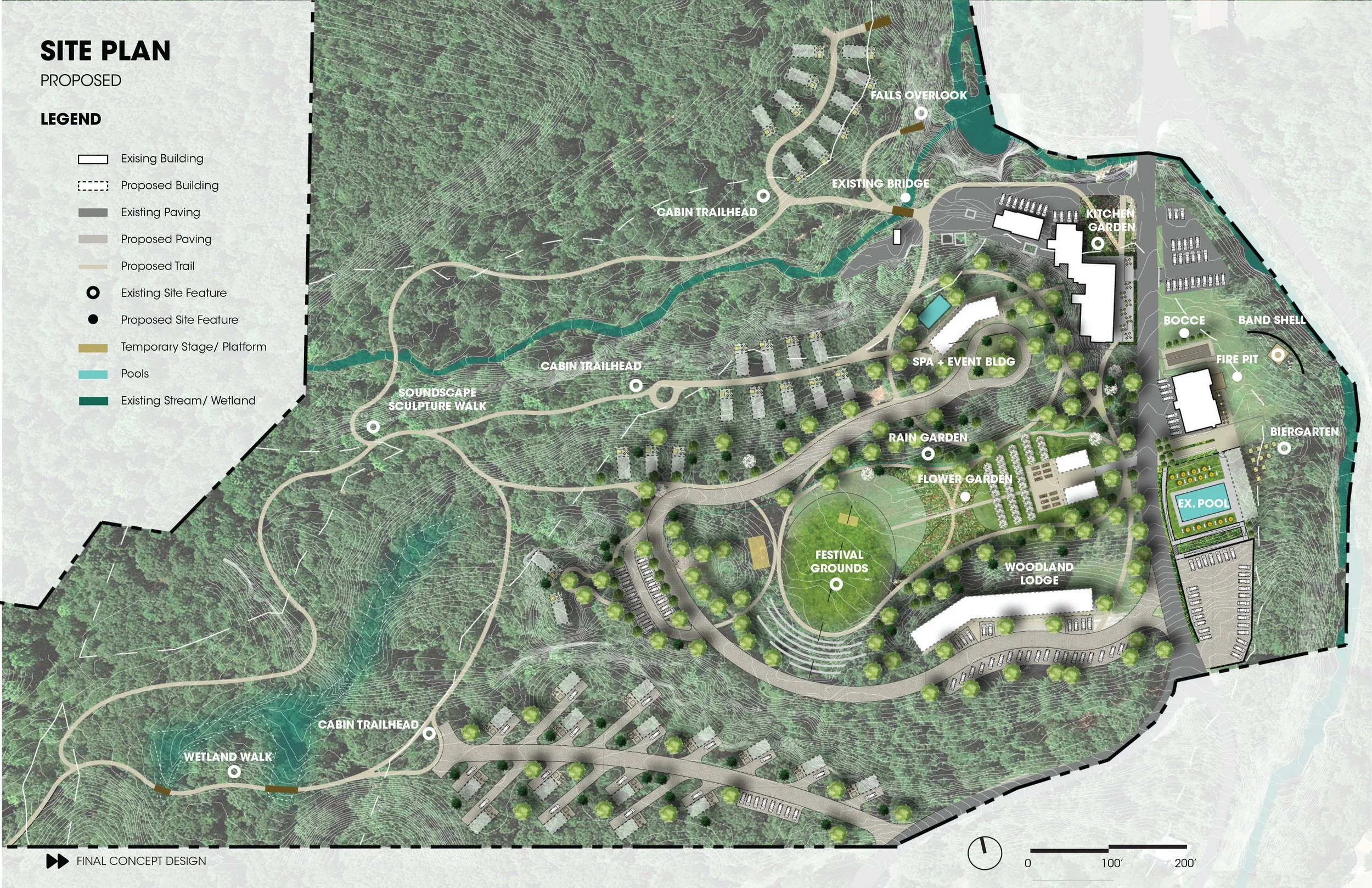
The Hudson Valley, layered with history, reveal a complex past from the geologic record, told through the dynamic topography to the cultural remnants of mountaintop hotels and legendary music festivals. The Hudson Valley Retreat Space sits at the gateway to the Catskill Mountains, telling its layered history. The Retreat Space has had many past lives, but now is an outdoor event space, spa, hotel, and network of trails. The proposed comprehensive plan provides a framework for how to feature the land’s most spectacular elements.
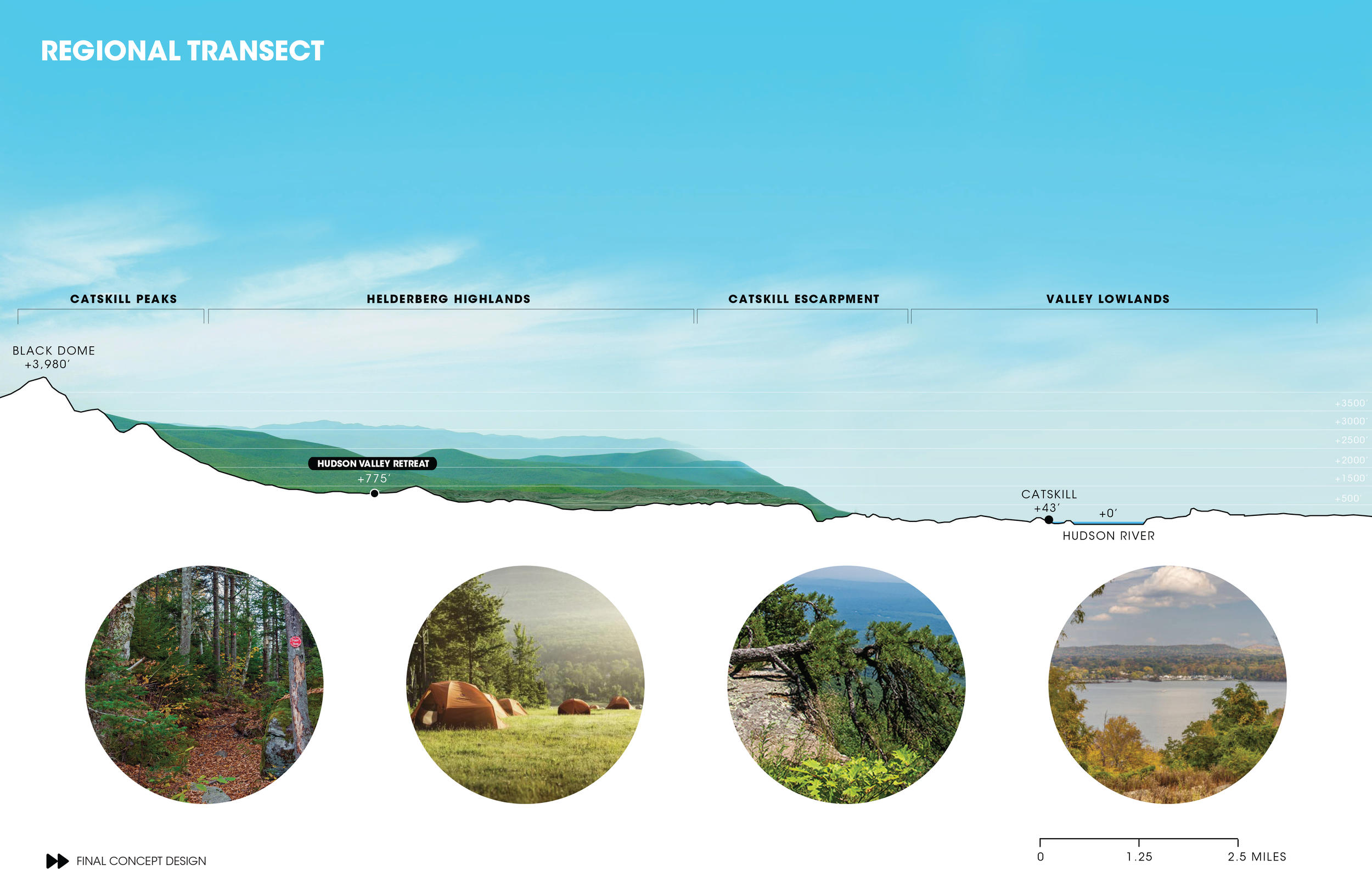
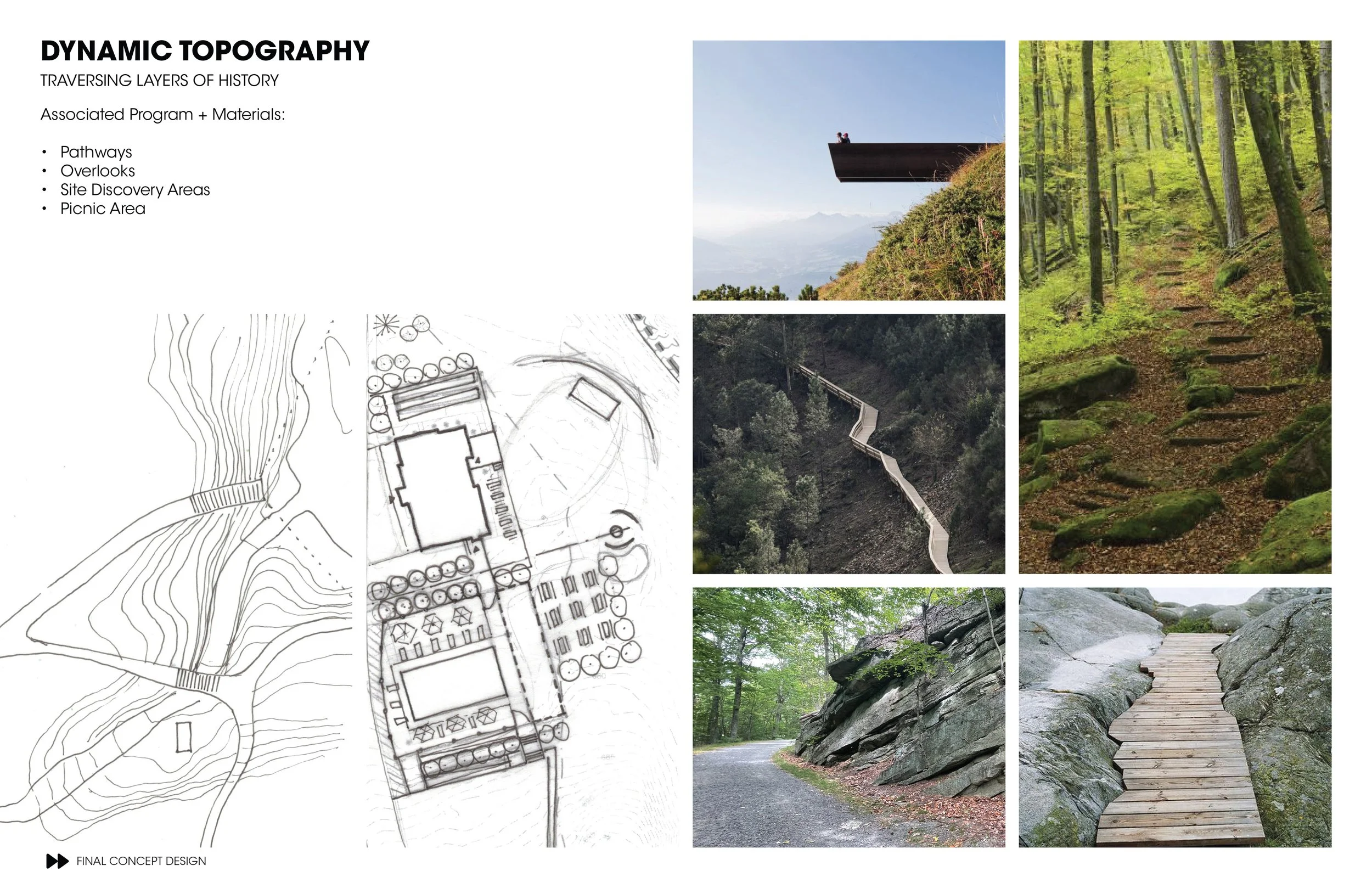
The first principle speaks to the dynamic topography of the site and region. Scaling the elevation of the site to access views of water falls or to sit among the distinct rock formations showcase the unique experiences of the site. The Comprehensive Site Plan prioritizes accessible routes for all adventurers.
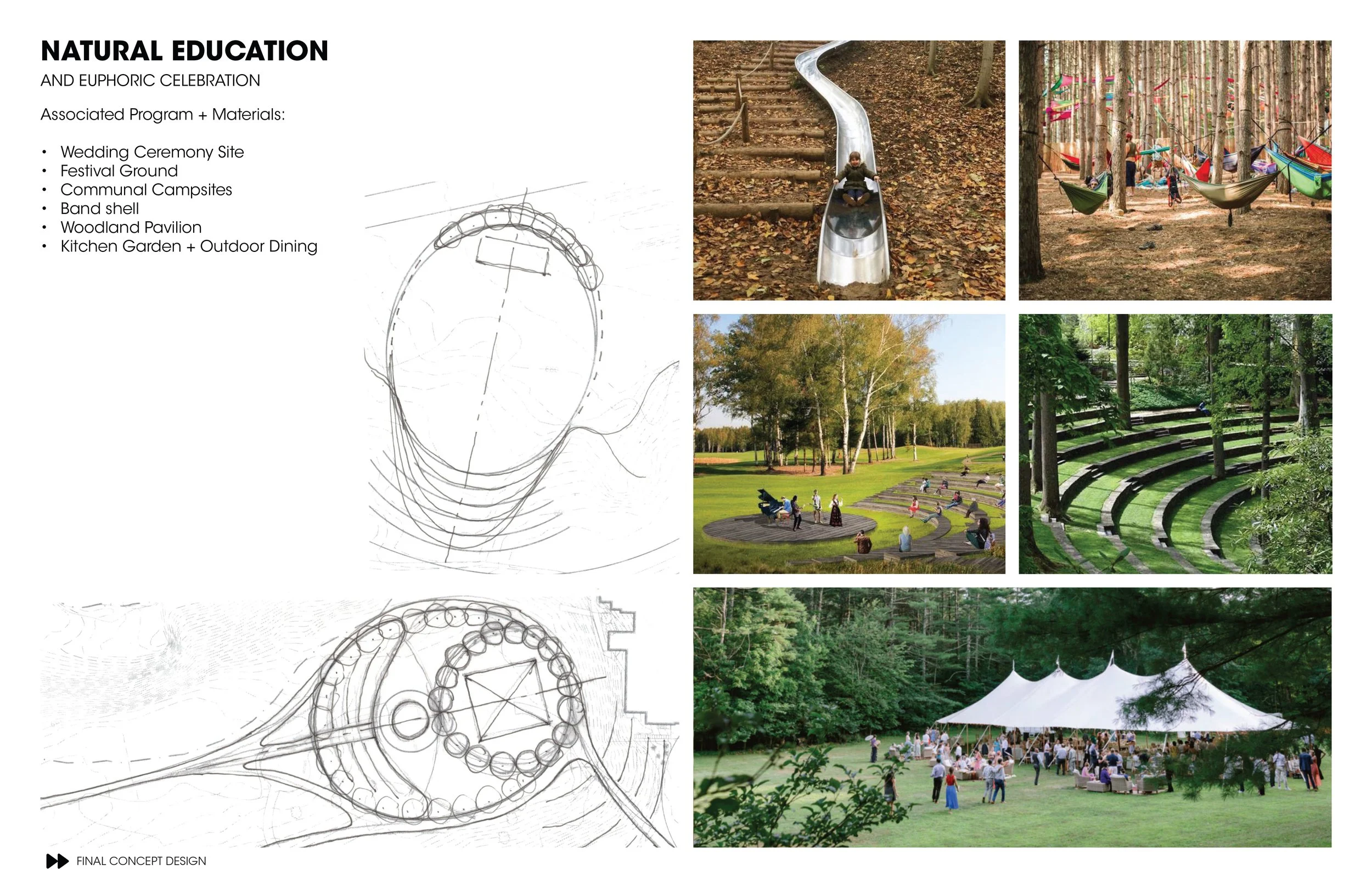
The second principle of euphoric celebration draws from the region’s ties to music and the joy of experiencing nature. The Catskills became a known vacation destination in the 1800s with the construction of remote hotels with expansive views of the Hudson Valley. It exploded in popularity in the 1950s with the Borsht Belt resorts catering to the Jewish Community. The culture of euphoric celebration blossomed in the Catskills after hosting the most famous music event in history, Woodstock, in the summer of 1969. The site taps into that legacy by featuring several event spaces, varying in scale and character to adapt to the types of celebrations on site, ranging from intimate weddings to weekend-long music festivals. In addition to collective gathering, It was essential to the owners also to provide space for individual celebration and reflection.
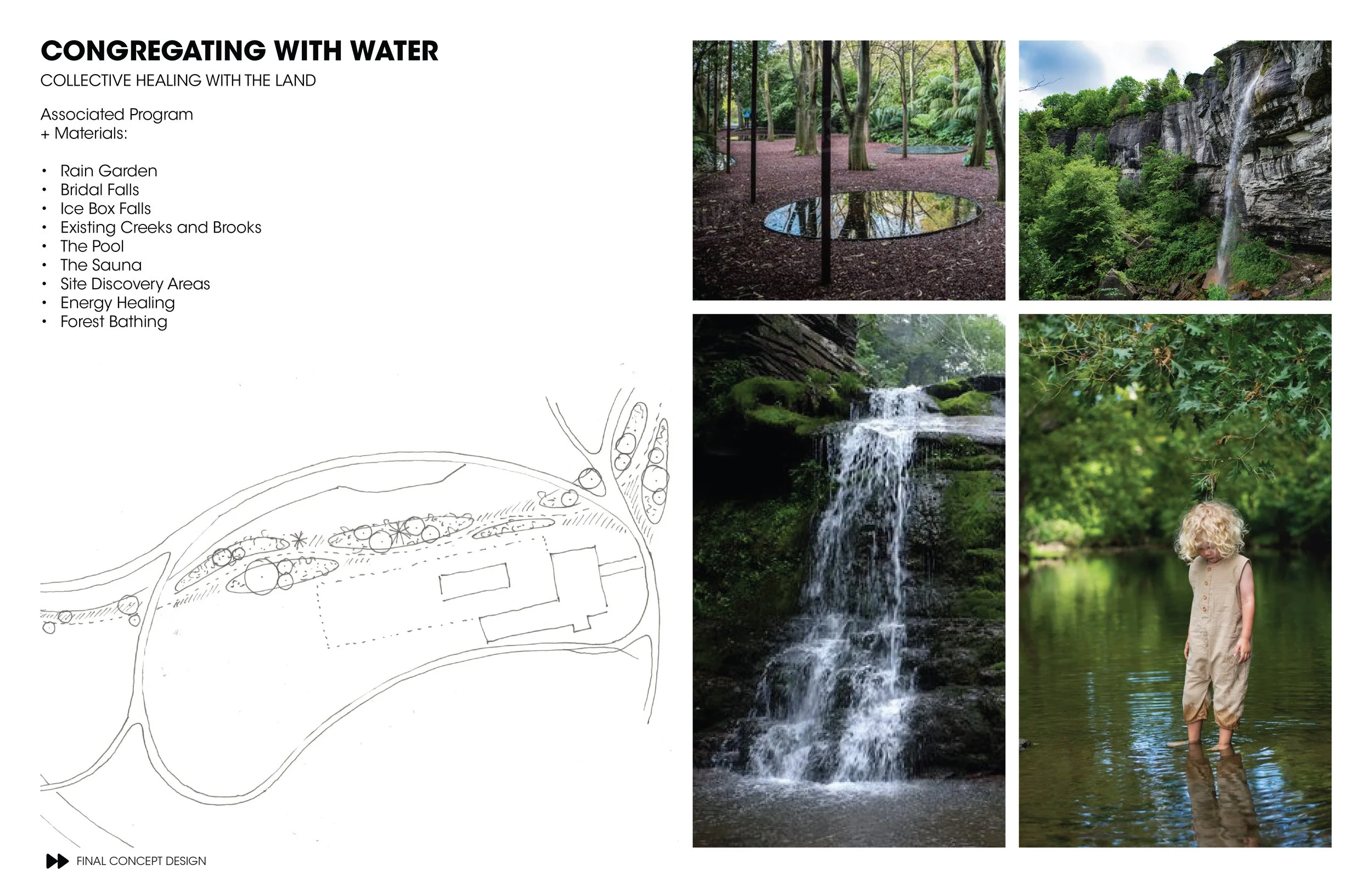
The third principle, congregation with water, features the site’s natural hydrologic systems and the opportunity to interact and heal with the elements. Recreation, ritual, and reflection are several ways visitors can convene with water. The presence of ecologically significant stream corridors and wetlands requires space and respect but also offers unique experiences to hikers, campers, and any visitor looking to spend time with the dynamic and native landscapes of the Catskills. Areas of the property susceptible to flooding and inundation during storm events present opportunities for rainwater gardens as a site feature. The development of the property that shares the revelatory history of the Catskills and Hudson Valley region will ensure the landscape remains a popular destination for locals and tourists for years to come.
Role: Lead Landscape Architect
Client: Private
Team: SomaBuild
Location: Hudson Valley, NY
Project Area: 46 Acres
Date: Comprehensive Site Plan, 2023